
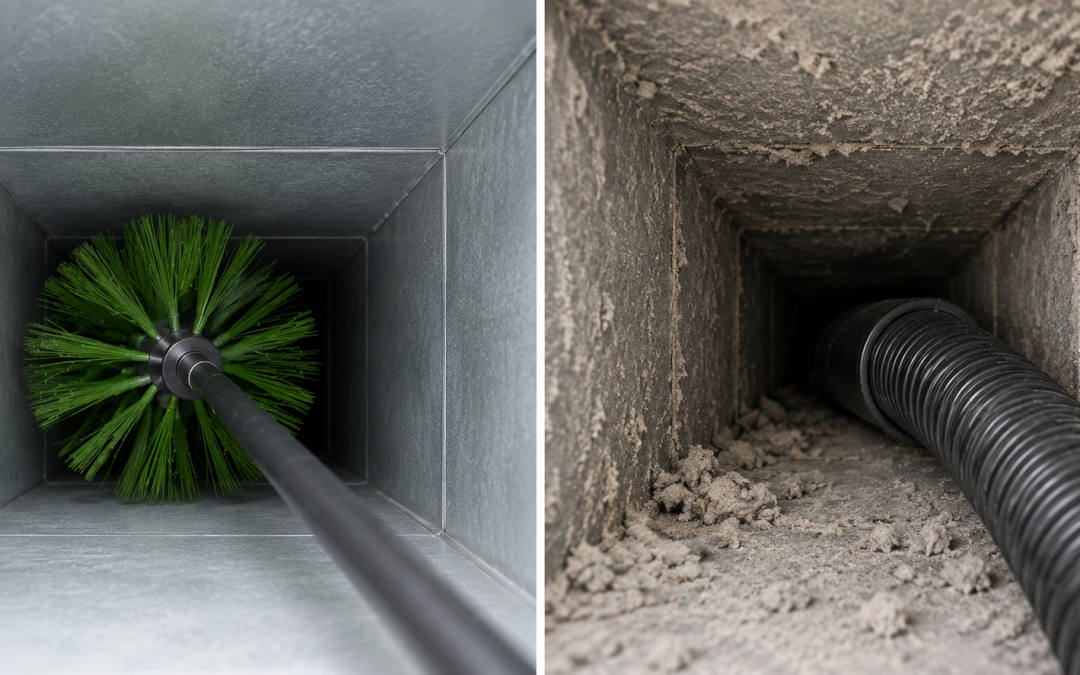
The short version: a RotoBrush system uses a rotating brush that physically scrubs the inside walls of your ductwork while a vacuum pulls the loosened debris out at the same time. A standard shop-vac cleaning just sticks a hose down the vent and sucks at the surface; it never agitates the buildup that’s stuck to the duct walls. That difference is why a proper RotoBrush job actually removes the dust, dander, and pollen packed into your system, and why the cheap “$99 special” usually leaves most of it behind.
If you’re trying to figure out why one company quotes $99 and another quotes $449 for what sounds like the same service, this is the answer. They’re not doing the same service.
What a standard vacuum cleaning actually does
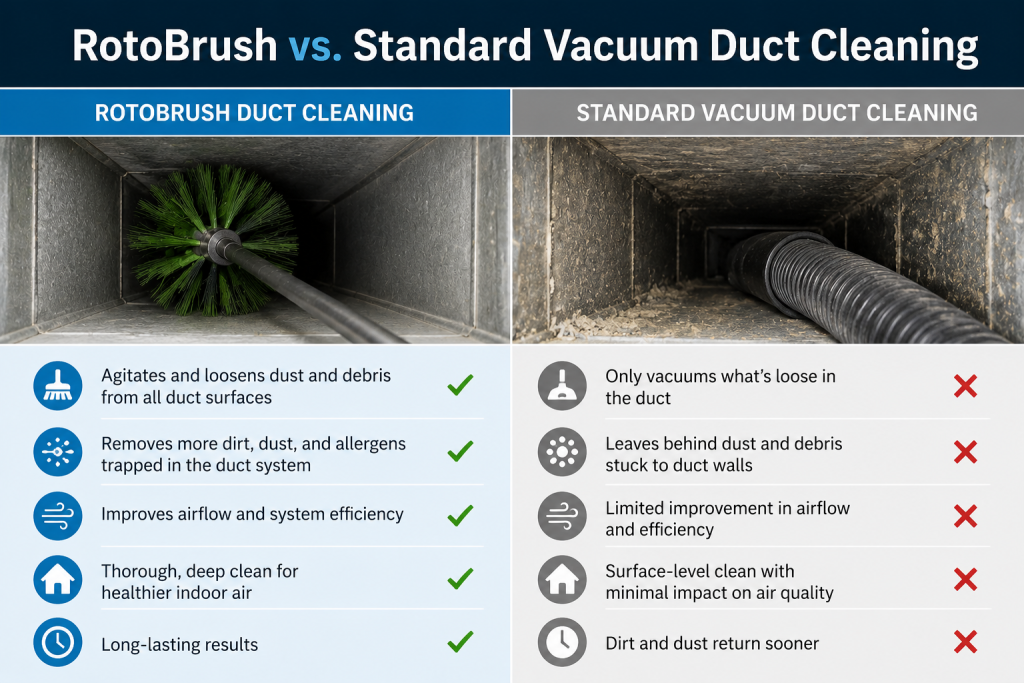
The bargain version of duct cleaning is simple, and that’s the problem. A technician shows up with a shop-vac-style machine, removes your vent covers, and pushes a hose as far down each vent as it’ll go. The vacuum runs, pulls whatever loose dust is sitting near the opening, and they move to the next room. In and out in well under an hour.
Here’s what that misses. Most of the gunk in a duct system isn’t loose; it’s caked onto the inside walls of the ductwork, held there by static and moisture. Plain suction at the vent opening does nothing to that. The vacuum opening on these setups is often two inches or less, which isn’t enough to pull heavier debris, and without anything scrubbing the walls, the stuff that’s actually causing your air quality problems stays exactly where it is.
The result is a system that looks serviced the vent covers are off and back on, you got a receipt but the ducts themselves are barely touched. That’s the trap most homeowners don’t see until they realize their dust problem never went away.
What a RotoBrush cleaning does differently
The RotoBrush is a contact cleaning method, and the key word is contact. Instead of relying on suction alone, it combines two actions at once:
- A rotating brush travels down the duct and physically scrubs the buildup off the duct walls the part suction can’t touch.
- A vacuum runs through the same head, so the moment the brush knocks debris loose, it gets pulled out before it can resettle or blow back into your rooms.
The technician works the brush-and-vacuum head through the system vent by vent, so every accessible run gets scrubbed rather than just sampled at the opening. This is the method built for residential ductwork specifically it’s maneuverable enough to get into the smaller, more delicate duct runs in a typical home, and the brushing is what makes the cleaning thorough instead of cosmetic.
That’s the whole point of the difference: agitation. Dust that’s been baked onto a duct wall through a few San Antonio summers doesn’t come out because you waved a vacuum near it. It comes out because something physically scrubbed it loose and pulled it away in the same pass. (You can see exactly what’s included on our air duct cleaning page.)
Side by side
| Standard shop-vac cleaning | RotoBrush contact cleaning | |
|---|---|---|
| How it cleans | Suction at the vent opening only | Rotating brush scrubs duct walls + vacuum pulls debris out simultaneously |
| Wall buildup | Largely untouched suction can’t lift caked-on dust | Physically scrubbed off the duct walls |
| Debris it can handle | Light, loose surface dust near the vent | Packed-in dust, dander, pollen, and debris throughout the run |
| Risk of recirculation | Loosened dust can blow back into rooms | Vacuum captures debris at the brush head as it’s freed |
| Typical time on site | Often under an hour | A genuine, room-by-room cleaning of the system |
| What you’re really paying for | A receipt | Ducts that are actually clean |
Why this is the real story behind the $99 ad
When you see a duct cleaning advertised for $99, this is almost always what’s happening: it’s a shop-vac surface job, priced as a loss leader to get a tech in your door. Two things usually follow. Either the price climbs steeply once they’re inside and “find” extra work, or you pay the $99, get a superficial clean, and your air quality never changes which means you’re back to needing the real thing far sooner than you should be.
For context, NADCA the National Air Duct Cleaners Association that sets the industry’s standards puts the national cost of properly cleaning a full system in an average home somewhere between $450 and $1,000. A genuine cleaning takes real equipment, trained hands, and time. A number like $99 simply can’t cover that, so something has to give, and what gives is the actual cleaning.
We price our air duct cleaning flat and upfront for exactly this reason. No inspection-day surprises, no upsell ambush the number we quote is the number you pay, and it covers a full RotoBrush cleaning of your system.
Does the method matter for mold?
Yes, and it’s worth calling out. If there’s mold in your ductwork, surface suction is the last thing that’s going to fix it you need the buildup physically removed and the system treated, not skimmed. Mold is also one of the situations where you shouldn’t wait on a schedule at all; it spreads through the whole house every time the system runs. If you suspect mold, that’s a different and more urgent job, covered on our air duct mold removal page.
What about the dryer vent?
Different job, different tools, but the same principle applies: a real cleaning clears the full run, not just the opening. Lint packs into the vent hose and is a known fire hazard, so a proper dryer vent cleaning clears the whole line and confirms it with a camera, rather than just pulling lint off the back of the dryer and calling it done.
Bottom line
The difference between a RotoBrush cleaning and a standard vacuum cleaning isn’t a small upgrade it’s the difference between actually cleaning your ducts and just appearing to. The RotoBrush scrubs and vacuums at the same time, so the buildup that’s causing your dust and allergy problems comes out. A shop-vac at the vent opening leaves that buildup right where it is.
If you’ve had a cheap cleaning before and felt like nothing changed, now you know why. We’ve served San Antonio for over a decade, we’re NADCA certified, and we’ll do the job properly the first time. Schedule a service or get a quote here, or call us at 210-988-5026.
Frequently Asked Questions
What is the difference between RotoBrush and standard vacuum duct cleaning? A RotoBrush uses a rotating brush to physically scrub buildup off the duct walls while a vacuum pulls the debris out at the same time. A standard shop-vac cleaning only applies suction at the vent opening and doesn’t agitate the buildup stuck to the duct walls, so most of the debris stays behind.
Why is RotoBrush cleaning more expensive than a $99 special? Because it’s a fundamentally more thorough job. The $99 version is typically a quick surface clean used to get a technician in the door. A proper full-system cleaning nationally runs $450 to $1,000 because it requires real equipment, trained technicians, and time.
Does the RotoBrush damage ductwork? When used correctly by a trained technician, no. The brush-and-vacuum method is designed for residential ductwork and is maneuverable enough for the smaller, more delicate duct runs found in most homes.
Can a standard vacuum cleaning remove mold from ducts? No. Surface suction doesn’t remove mold that’s growing on duct surfaces. Mold requires the buildup to be physically removed and the system treated, and it should be addressed promptly because it spreads through the home whenever the HVAC runs.
How do I know if my last duct cleaning was actually thorough? If your dust or allergy problems didn’t improve after the cleaning, it was likely a surface-only job. A proper cleaning scrubs the duct walls room by room, and you should notice a real difference in the air.