
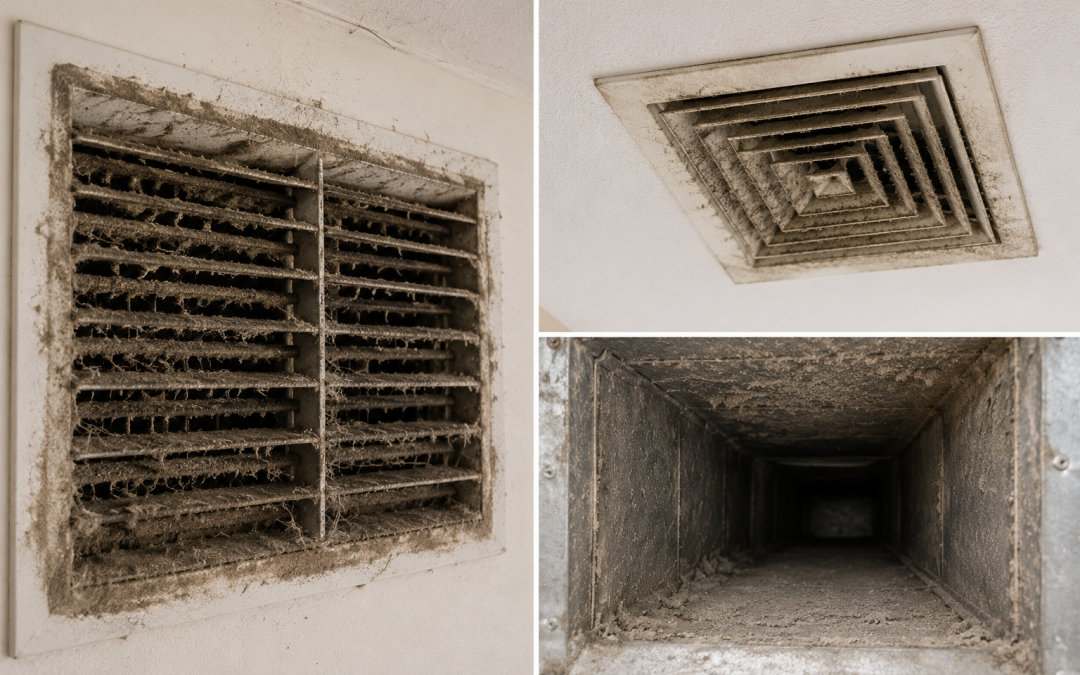
Honest answer: dirty air ducts don’t cause allergies, but they can absolutely make existing allergy symptoms worse, and in some homes, cleaning them helps noticeably. The catch is that it depends heavily on your specific situation. If your ducts have mold, heavy dust, or pet dander packed in, cleaning can meaningfully cut the allergens circulating through your house. If they’re only lightly dusty, the EPA’s position is that there’s no strong evidence it’ll change anything.
So the real question isn’t “do dirty ducts cause allergies.” It’s “are your ducts dirty enough that cleaning them would help.” Here’s what the evidence actually supports, without the marketing spin.
What dirty ducts actually do
Your duct system is the path every bit of conditioned air takes before it reaches the rooms you live in. Over time, the things that trigger allergic reactions (dust mite debris, pollen, pet dander, mold spores) settle onto the inside walls of that ductwork. Every time your HVAC kicks on, some of that material gets picked back up and recirculated through the house.
That’s the mechanism that matters. Ducts don’t create allergens out of nothing, and a dirty duct isn’t going to give a person allergies they didn’t already have. What it can do is act as a reservoir, holding a season’s worth of pollen and dander and then redistributing it every cycle. For someone whose immune system is already reacting to those triggers, a loaded duct system quietly works against them.
The EPA’s own framing is worth knowing here. Indoor concentrations of some pollutants can run two to five times higher than outdoor levels, and the people most sensitive to that, allergy and asthma sufferers, also tend to spend the most time indoors. So the indoor air you breathe most isn’t automatically the cleanest.
What the evidence says, the honest version
This is where most duct cleaning content overclaims, so here’s the straight picture.
The EPA does not recommend routine duct cleaning, and is upfront that the science is unsettled. Their published position is that while the debate over the value of periodic cleaning continues, there’s no evidence that a light amount of household dust in your ducts poses a health risk. They also note something important in the other direction: provided it’s done properly, there’s no evidence that duct cleaning is harmful either. In other words, the EPA isn’t against it. They’re against doing it pointlessly, and against doing it badly.
The research is genuinely mixed. Some studies show that professional cleaning reduces allergen levels in homes with real contamination. Others find little lasting connection between duct cleaning and long-term allergy relief. One frequently cited figure: a study found professional duct cleaning reduced airborne particulate concentrations, including mold spores, dust mite fragments, and pet dander, by somewhere in the range of 30 to 50% in homes that had meaningful buildup to begin with.
The pattern in that research is consistent and useful. Cleaning helps most in homes that actually have a problem. Mold, pets, heavy dust, and post-renovation debris are the homes where people report a real difference. In a clean, low-dust home with no pets and no mold, the benefit is small to negligible. That’s not a knock on cleaning. It’s just being honest about when it’s worth it.
One more caveat the EPA is clear about, and we agree with: a bad cleaning can make things worse. If a technician uses inadequate equipment or skips proper procedure, they can knock contaminants loose and blow them into your living space instead of removing them. The method matters as much as the decision to clean, which is why we use a proper RotoBrush system rather than a shop-vac.
When cleaning your ducts is likely to help your allergies
Based on what the evidence actually supports, you’re in the group most likely to benefit if any of these apply:
- There’s visible mold in or around your vents, or a musty smell when the system runs. This is the strongest case, and it’s not really optional, because mold spreads through the house every cycle. (We cover this on our air duct mold removal page.)
- You have pets that shed. Dander accumulates in ductwork faster than most people expect.
- Someone in the home has allergies or asthma that get worse indoors, not better, especially if symptoms track with the system running.
- You’ve recently renovated. Drywall dust and construction debris are exactly the kind of heavy contamination cleaning is built for.
- There’s visible dust puffing from the vents, or dust resettles on surfaces almost immediately after you clean.
If two or more of those describe your home, the evidence is on the side of cleaning making a noticeable difference.
When it probably won’t move the needle
Equally honest: if you have a relatively new or low-dust home, no pets, no mold, no smokers, and nobody with respiratory issues, a duct cleaning is unlikely to produce a dramatic change in your allergies. The ducts simply aren’t holding enough to matter. In that case, the higher-impact moves are the boring ones. Changing your HVAC filter on schedule, vacuuming and dusting regularly, and washing bedding, because a lot of allergen exposure comes from surfaces and soft furnishings, not the ductwork.
We’d rather tell you that up front than sell you a service you don’t need. That’s also why we quote flat, upfront pricing and inspect before we recommend anything.
The San Antonio angle
Here’s why this matters more locally than the national averages suggest. San Antonio doesn’t really get an allergy off-season. Mountain cedar floods the air from December through February, oak takes over through spring, grass carries the summer, ragweed handles the fall, and the mild, damp winters keep mold viable year-round. All of that pollen and spore load has to enter homes somewhere, and a lot of it ends up settling into duct systems.
That’s the practical reason more San Antonio homes fall into the “cleaning will help” category than you’d expect from EPA’s national, climate-neutral guidance. If your January “cold” is really cedar fever and your ducts are holding last year’s pollen, the two are compounding on each other.
Bottom line
Dirty ducts don’t cause allergies, but they can carry and recirculate the allergens that trigger them, and in homes with mold, pets, or heavy dust, professionally cleaning them can make a real, noticeable difference. The evidence doesn’t support cleaning a spotless system on a timer, and it doesn’t support the “surefire cure” claims you’ll see elsewhere. It supports cleaning when there’s an actual reason to.
The honest way to find out which camp your home is in is an inspection. We’ve served San Antonio for over a decade, we’re NADCA certified, and we’ll tell you straight whether cleaning is likely to help or whether you’re better off saving the money. Schedule a service or get a quote here, or call us at 210-988-5026.
This article is general information, not medical advice. If you or a family member has persistent or unexplained respiratory symptoms, talk to a doctor about what’s driving them.
Frequently Asked Questions
Can dirty air ducts cause allergies? Dirty ducts don’t cause allergies, but they can worsen existing symptoms by collecting allergens like pollen, dust mite debris, pet dander, and mold spores and recirculating them through the home every time the HVAC runs.
Does air duct cleaning actually help with allergies? It can, in homes that have real contamination such as mold, pets, heavy dust, or post-renovation debris. Research shows professional cleaning can reduce airborne particulates meaningfully in those homes. In clean, low-dust homes, the benefit is small.
Does the EPA recommend air duct cleaning for allergies? The EPA does not recommend routine cleaning and says the science is unsettled, but it also states that proper cleaning isn’t harmful and recommends cleaning when there’s visible mold, pest infestation, or heavy debris.
Can a bad duct cleaning make allergies worse? Yes. If a cleaning is done with inadequate equipment or poor technique, it can dislodge contaminants and release them into your living space. Proper equipment and procedure are what make cleaning effective rather than counterproductive.
What helps allergies besides duct cleaning? Changing HVAC filters on schedule, vacuuming and dusting regularly, and washing bedding all reduce allergen exposure, since much of it comes from surfaces and soft furnishings rather than the ducts. Duct cleaning works best as one part of a broader approach.