
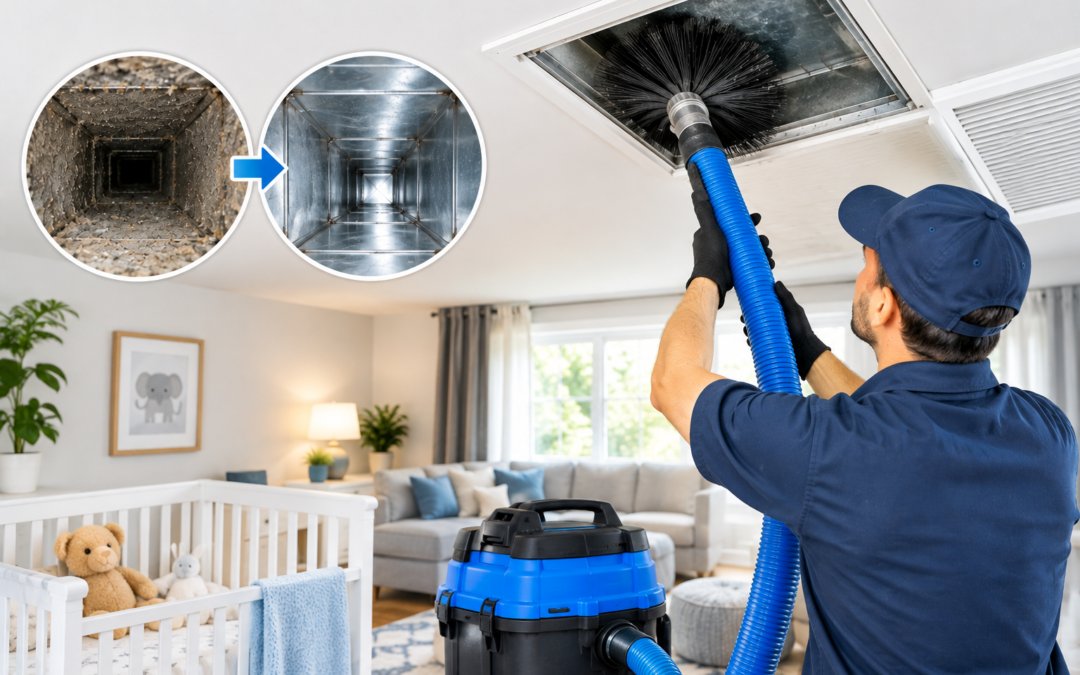
Preparing your home for a newborn involves more than setting up the nursery, washing baby clothes, and installing a crib. Many expecting parents also want to create a clean, comfortable indoor environment before bringing their baby home. One question worth considering is whether air duct cleaning before bringing home a newborn should be part of that preparation.
Your home’s heating, ventilation, and air conditioning (HVAC) system circulates air throughout the house. Over time, dust and other debris may accumulate in the ductwork. If the system contains substantial contamination, professional cleaning may help remove it. However, duct cleaning is not automatically necessary in every home, and it has not been proven to prevent health problems.
Understanding when cleaning is appropriate—and which other steps can help maintain indoor air quality—allows you to prepare your home with greater confidence.
Should You Clean Air Ducts Before Bringing Home a Newborn?
Air duct cleaning may be worthwhile before bringing home a newborn if your HVAC system contains substantial dust, visible mold growth, pest contamination, or debris from recent construction.
The U.S. Environmental Protection Agency (EPA) does not recommend routine air duct cleaning for every household. Instead, it advises homeowners to consider cleaning when specific conditions indicate a need. The EPA also notes that duct cleaning has not been shown to prevent health problems. Read the EPA’s guidance on air duct cleaning.
For expecting parents, the practical approach is to assess the home’s condition rather than assume that cleaning is essential simply because a baby is arriving.
If your ductwork appears clean and there are no signs of contamination, other steps—such as changing a dirty HVAC filter, removing dust from surfaces, controlling moisture, and avoiding indoor smoke—may be more useful priorities.
5 Signs Your Air Ducts May Need Cleaning Before Your Baby Arrives
Before scheduling a service, look for evidence that the HVAC system may require attention.
1. Excessive Dust and Debris Inside the Ducts
A small amount of household dust around a vent is normal. However, substantial deposits inside accessible ductwork or particles visibly blowing from supply registers may justify a professional inspection.
A qualified technician can assess the extent of contamination and explain whether cleaning is appropriate.
2. Recent Home Renovations or Construction
Remodeling projects can generate drywall dust, sawdust, insulation particles, and other debris. If your home has recently undergone renovation, ask whether the HVAC system operated during construction and whether the vents were protected.
If construction debris entered the ductwork, arrange an inspection before regular HVAC use when practical.
3. Visible Suspected Mold or Moisture Problems
If you notice visible suspected mold inside accessible ductwork or on HVAC components, or find evidence of water intrusion, investigate the underlying moisture source.
Cleaning alone may not solve the problem if leaks, condensation, or damp insulation remain. A qualified professional can determine the appropriate next steps.
4. Evidence of Rodents or Insects
Rodent droppings, nesting materials, insect remains, or other signs of pests near or inside the ductwork warrant investigation.
Address an active pest problem and its source. Cleaning may be appropriate after the contamination has been assessed and the underlying issue has been resolved.
5. An Unknown HVAC Maintenance History
If you have recently moved into a home and do not know when the HVAC system was last inspected, start by checking the filter and reviewing any available maintenance records.
An unknown history does not automatically mean the ducts are dirty. However, it is a good reason to assess the system’s condition and address any specific concerns.
How to Prepare Your Home’s Indoor Air Before a Newborn Arrives
Air duct cleaning is only one possible part of preparing a home for a baby. Several practical measures can help reduce common sources of indoor pollutants.
Replace or Check the HVAC Air Filter
Inspect your heating and cooling system’s filter and replace it if it is dirty or due for replacement.
Use the correct size and a filter efficiency recommended for your particular system. A filter that is unsuitable for the equipment may restrict airflow, so consult the manufacturer’s instructions or an HVAC professional if you are unsure.
Clean Floors and Household Surfaces
Dust hard surfaces with a damp cloth and clean floors regularly. Vacuum carpets and upholstered furniture with a suitable, well-maintained vacuum.
Wash bedding, curtains, and other washable fabrics as appropriate. These steps help address dust throughout the home rather than focusing exclusively on the ductwork.
Control Moisture and Repair Leaks
Check for plumbing leaks, persistent condensation, damp areas, and visible mold. Repair moisture problems promptly and ensure affected areas are properly dried.
The EPA identifies moisture control as an important part of managing biological contaminants indoors. See its guidance on biological contaminants and indoor air quality.
Avoid Smoke and Unnecessary Indoor Pollutants
Keep your home smoke-free. Avoid smoking indoors, and be mindful of activities that produce significant fumes or airborne particles.
When using cleaning products, follow label instructions, provide appropriate ventilation, and avoid unnecessary fragrance or aerosol products if they cause irritation.
Improve Ventilation When Appropriate
When outdoor air quality and weather conditions permit, bringing fresh outdoor air indoors can help improve ventilation. Exhaust fans can also help remove pollutants generated by cooking and certain household activities.
If outdoor air quality is poor, follow local air-quality guidance and use suitable filtration rather than opening windows indiscriminately.
When Should You Schedule Air Duct Cleaning Before a Newborn Arrives?
If an inspection identifies a genuine need for cleaning, scheduling the work before the baby comes home can make planning easier.
A practical sequence is:
- Inspect accessible vents and check the HVAC filter.
- Identify any construction dust, moisture issues, or signs of pests.
- Arrange a professional inspection if there is evidence of contamination.
- Correct underlying issues, such as leaks or active pest infestations.
- Schedule appropriate cleaning and allow the work area to be cleaned afterward.
- Follow the technician’s instructions about when to resume normal HVAC use and occupy the work area.
If cleaning is recommended, ask the provider about dust containment, ventilation, and any products it proposes to apply inside the system. Discuss precautions for sensitive occupants, and avoid unnecessary chemical treatments.
There is no universal requirement to clean ducts a certain number of days before a newborn arrives. Timing depends on the condition of the system, the work involved, and any product-specific safety instructions.
What Does Professional Air Duct Cleaning Include?
The exact scope depends on the HVAC system and the contamination present. A professional service may include inspecting accessible ductwork, removing accumulated debris, and cleaning the supply and return ducts and relevant components included in the agreed scope.
Before booking, ask the provider:
- Which ducts and HVAC components are included?
- What contamination has been identified?
- What equipment will be used to collect loosened dust?
- How will floors, furniture, and nearby areas be protected?
- Are chemical biocides, fragrances, or other treatments proposed?
- What precautions are recommended for household members during and after the work?
For a home being prepared for a newborn, clear answers are especially valuable. Do not assume that a service is safer or more effective simply because it includes additional chemical treatments.
A trustworthy provider should explain the proposed work, avoid unsupported health promises, and give you a clear estimate before beginning.
Does Air Duct Cleaning Make a Home Safer for Babies?
A clean and well-maintained home is a reasonable goal for new parents, but it is important to distinguish general cleanliness from proven health benefits.
Duct cleaning can remove accumulated debris from contaminated parts of an HVAC system. However, it has not been demonstrated to prevent allergies, asthma, respiratory infections, or other health conditions.
Indoor air quality is affected by many factors, including ventilation, filtration, outdoor pollution, smoke, moisture, cleaning products, and everyday activities. Addressing the actual sources of pollutants is therefore important.
If you have specific concerns about your newborn’s health or respiratory sensitivities, consult your pediatrician for individualized advice. Air duct cleaning should not be treated as a substitute for medical guidance or other appropriate indoor air quality measures.
Choose a Professional Air Duct Cleaning Service
If your home has substantial duct contamination or another condition that warrants cleaning, choosing a qualified provider can help ensure the work is appropriate for your system.
Look for a company that inspects before recommending service, explains its methods, protects your home from released dust, and provides a written estimate. Be cautious of claims that duct cleaning guarantees a healthier baby or prevents illness.
America’s Best Air Duct Cleaning is one provider you can explore when researching residential duct cleaning services. Visit americasbestairductcleaning.com to learn more about the company and determine whether its services are available for your home.
Preparing for a newborn can feel overwhelming, but you do not need to arrange every possible service to create a comfortable home. Start with the condition of your HVAC system, address any identified contamination, and focus on practical measures that support good indoor air quality.
If your home needs professional attention, schedule an air duct cleaning service before bringing your newborn home.
Frequently asked questions
1. Should I clean my air ducts before bringing home a newborn?
Consider cleaning if your ductwork contains substantial dust, visible mold growth, pest contamination, or construction debris. If the system is clean and has no specific problems, routine duct cleaning may not be necessary.
2. Can air duct cleaning prevent allergies in newborns?
There is no established evidence that duct cleaning prevents allergies or other health problems. Cleaning can remove debris from contaminated ductwork, but other indoor air quality measures may also be important.
3. How soon before a baby arrives should I clean my air ducts?
There is no universally recommended interval. If cleaning is warranted, arrange it before the baby arrives when practical, and follow the provider’s instructions for post-service cleanup, ventilation, and occupancy.
4. What else should I do to improve indoor air quality before a newborn arrives?
Check the HVAC filter, clean surfaces and floors, control moisture, repair leaks, avoid indoor smoke, and use appropriate ventilation. Consider an inspection if you suspect a specific indoor air quality problem.
5. Is air duct cleaning necessary in a new home?
Not automatically. New homes can contain construction dust, but cleaning should depend on whether debris entered the HVAC system and the system’s actual condition.
6. Are chemical treatments necessary during air duct cleaning?
Not in every case. Ask why a treatment is proposed, what product will be used, and whether it is appropriate for the duct material and intended application. The EPA advises consumers to understand the benefits and risks of chemical biocides and sealants before agreeing to their use.
7. How do I choose an air duct cleaning company?
Choose a provider that inspects the system, explains the need for cleaning, outlines the service in writing, uses appropriate dust-containment equipment, and avoids unsupported medical or health claims.