
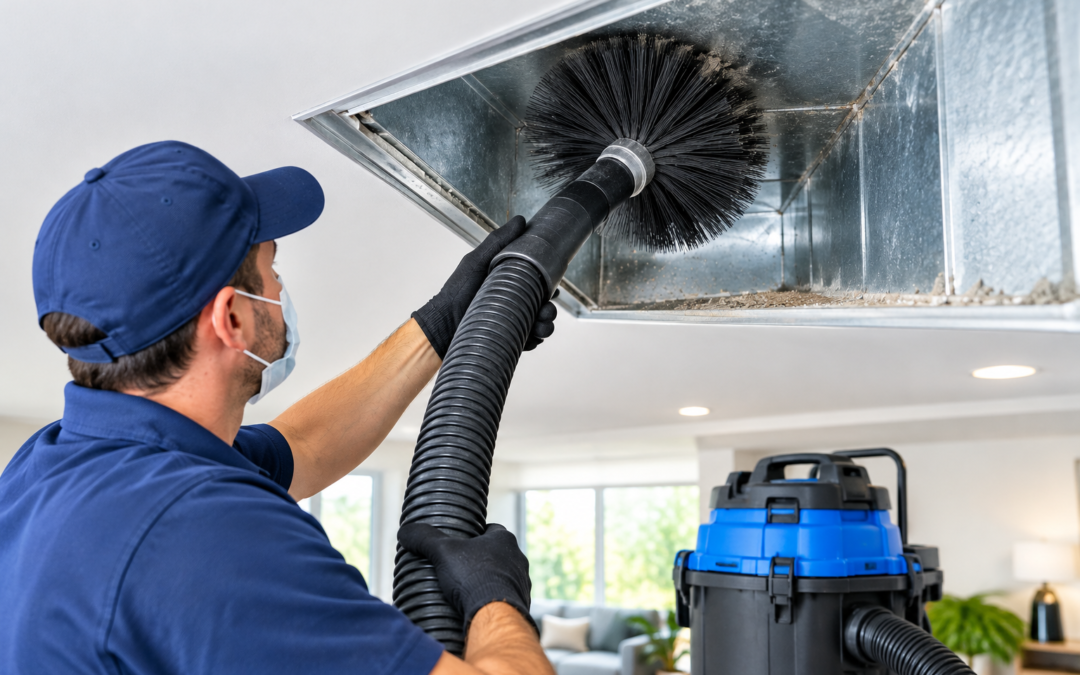
Buying a house is an exciting milestone, but moving into a new property also comes with a long list of maintenance tasks. From changing the locks to checking the plumbing, new homeowners want to make sure their home is clean, comfortable, and ready for everyday life. One question that often comes up is: Should you clean air ducts after buying a house?
The answer depends on the condition of the home’s heating, ventilation, and air conditioning (HVAC) system. Air duct cleaning is not automatically necessary every time a property changes ownership. However, if the ductwork contains substantial dust, construction debris, signs of pest activity, or other contamination, professional cleaning may be worthwhile.
Here’s what new homeowners should know before deciding whether to schedule an air duct cleaning service.
Should You Clean Air Ducts After Buying a House?
You should consider air duct cleaning after buying a house if there is evidence that the ductwork needs attention. Examples include visible debris inside the ducts, contamination from a renovation, evidence of rodents or insects, or dust accumulation associated with a known problem in the HVAC system.
On the other hand, if the system is in good condition, the ducts appear clean, and there are no specific contamination concerns, immediate cleaning may not be necessary.
The U.S. Environmental Protection Agency (EPA) does not recommend routine air duct cleaning for every home. Instead, it advises homeowners to consider cleaning when there is a specific reason to do so.
For new homeowners, this means making an informed decision based on the property’s condition rather than assuming that all previously occupied homes need duct cleaning.
6 Signs Your New Home May Need Air Duct Cleaning
Before scheduling a service, look for signs that dust or other debris may have accumulated in the HVAC system.
1. Visible Dust and Debris Inside the Ducts
If you can see substantial dust buildup, construction debris, or other material inside accessible duct openings, a professional inspection may be appropriate.
Keep in mind that a thin layer of ordinary household dust does not necessarily mean the entire duct system needs cleaning. The amount, location, and type of contamination matter.
2. Evidence of Rodents or Insects
Previous occupants may have experienced pest problems that affected parts of the HVAC system. Droppings, nesting materials, insect remains, or other evidence near duct openings should be investigated.
If pests are active, arrange appropriate pest control and address entry points before or alongside any necessary duct cleaning.
3. Recent Remodeling or Construction
If the previous owner remodeled the kitchen, replaced flooring, finished a basement, or completed other renovation work, construction dust may have entered the ductwork.
Ask whether the HVAC system operated during the project and whether return vents were protected. If substantial dust entered the system, a professional inspection can help determine whether cleaning is needed.
4. A History of Water Damage or Moisture
Water damage near HVAC components or inside ductwork deserves attention. Moisture can contribute to microbial growth under suitable conditions.
If you notice visible suspected mold, persistent dampness, or a musty odor associated with the HVAC system, investigate the underlying moisture problem. Do not assume that ordinary duct cleaning alone will resolve it.
5. Persistent Dust or Unexplained Debris
If rooms become dusty unusually quickly after routine cleaning, the HVAC system may be one factor to investigate. However, outdoor air, pets, carpets, household activities, and inadequate filtration can also contribute.
Look at the broader indoor environment before concluding that dirty air ducts are the cause.
6. Unknown HVAC Maintenance History
When buying a house, you may not know when the air ducts were last inspected or cleaned. An unknown maintenance history alone does not prove cleaning is necessary, but it is a good reason to check the HVAC filter, review available maintenance records, and inspect accessible components.
What Should You Check Before Cleaning Air Ducts?
Before paying for professional duct cleaning, take a few practical steps to understand the system’s condition.
Review the Home Inspection Report
Your home inspection report may identify HVAC concerns, visible contamination, damaged ductwork, or signs of moisture. Review any recommendations and ask your inspector or an HVAC professional to clarify issues that were not fully evaluated.
A standard home inspection may not include a detailed internal inspection of every duct.
Check and Replace the HVAC Air Filter if Needed
Locate the system’s air filter and check its condition. If it is dirty, replace it according to the manufacturer’s instructions.
Make sure the replacement filter has the correct dimensions and is suitable for your system. A clean filter helps capture airborne particles, but replacing it does not remove debris that has already accumulated inside the ductwork.
Inspect Accessible Vents
Look at accessible supply registers and return grilles for excessive dust, debris, or signs of moisture. Avoid removing equipment panels or reaching deep into ducts yourself.
If you find substantial contamination or are unsure what you are seeing, ask a qualified professional to inspect the system.
Ask the Previous Owner About Maintenance
If possible, ask the seller when the HVAC system was last serviced, whether any renovations took place, and whether there were known pest or moisture problems.
Maintenance records can help you distinguish a system that needs attention from one that has been properly maintained.
What Are the Benefits of Air Duct Cleaning for New Homeowners?
When the ductwork is genuinely contaminated, professional cleaning can offer several practical benefits.
- Removal of accumulated debris: Cleaning can remove dust and other contaminants from the parts of the system included in the service.
- A cleaner HVAC system: Removing substantial debris can help address a specific cleanliness concern.
- Attention to neglected maintenance: An inspection may identify visible problems that deserve further investigation.
- A fresh maintenance starting point: New owners can establish a maintenance record and follow a sensible filter replacement and HVAC servicing schedule.
However, it is important to have realistic expectations. Duct cleaning does not guarantee better health, eliminate every airborne particle, or automatically reduce energy bills. Benefits depend on the condition of the system and the work performed.
How Much Does Air Duct Cleaning Cost After Buying a House?
The cost of air duct cleaning in the United States varies by location, home size, HVAC system configuration, contamination level, and the scope of service.
A larger home with multiple systems may require more work than a smaller property with a single HVAC system. Additional services, such as cleaning certain HVAC components, may also affect the estimate.
Before booking, ask for a written quote that explains:
- Which supply and return ducts are included.
- Whether registers and grilles are included.
- Which accessible HVAC components will be inspected or cleaned.
- Whether additional charges may apply.
- Whether any recommended treatments are optional and why they are needed.
Be cautious of unusually low introductory prices that increase substantially once technicians arrive. A clear estimate and a well-explained scope of work make it easier to compare providers.
How to Choose an Air Duct Cleaning Company
Choosing a qualified provider helps ensure that the service addresses an actual need and that your HVAC system is handled appropriately.
Before hiring a company, ask whether it will inspect the system before recommending cleaning, explain what was found, and identify exactly which components are included.
You should also ask about its cleaning equipment, dust containment methods, technician qualifications, and the precautions used to protect your home.
Avoid providers that promise to cure allergies, eliminate all indoor air pollution, or guarantee specific energy savings through duct cleaning alone. A trustworthy company should explain what the service can accomplish and what it cannot.
Make Air Duct Inspection Part of Your New-Home Maintenance Plan
Buying a house is a good opportunity to establish a maintenance routine for your HVAC system. Start by reviewing the inspection report, checking the air filter, examining accessible vents, and asking about previous maintenance.
If you discover substantial debris, evidence of pests, contamination from construction, or another specific concern, arrange a professional assessment to determine whether duct cleaning is appropriate.
If the system appears clean and there are no signs of contamination, you may be able to postpone cleaning and focus on regular HVAC maintenance instead.
America’s Best Air Duct Cleaning is one provider you can explore when researching professional duct cleaning services. Visit americasbestairductcleaning.com to learn more about the company and its available services.
If your new home has signs of duct contamination or you want a professional assessment of a specific concern, take the next step: schedule an air duct cleaning service when recommended by the inspection.