
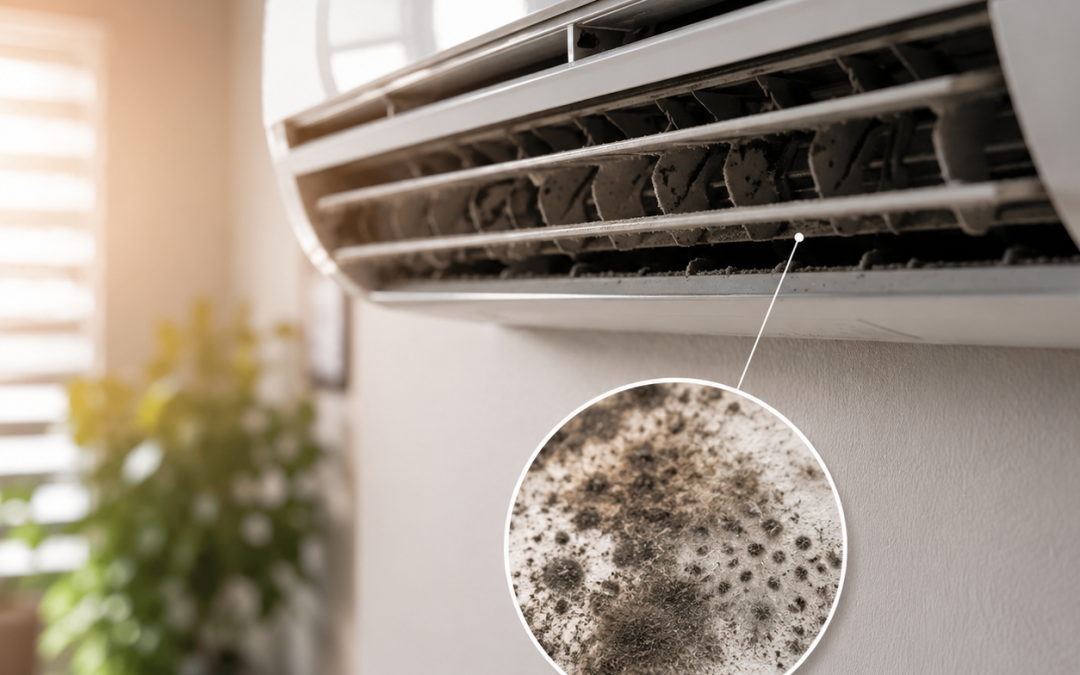
You walk in from the Texas heat, the AC cycles on, and there it is. That damp, old-towel smell drifting out of the vents. It fades after a few minutes, so you ignore it. Then it comes back the next time the system kicks on.
Here’s the thing about that smell: it’s never random. Something inside your HVAC system is holding moisture, and in San Antonio’s humidity, moisture never stays just moisture for long. This guide walks through every likely cause, from most common to least, so you can figure out what you’re dealing with before you call anyone.
Why the Smell Shows Up the Moment the AC Starts
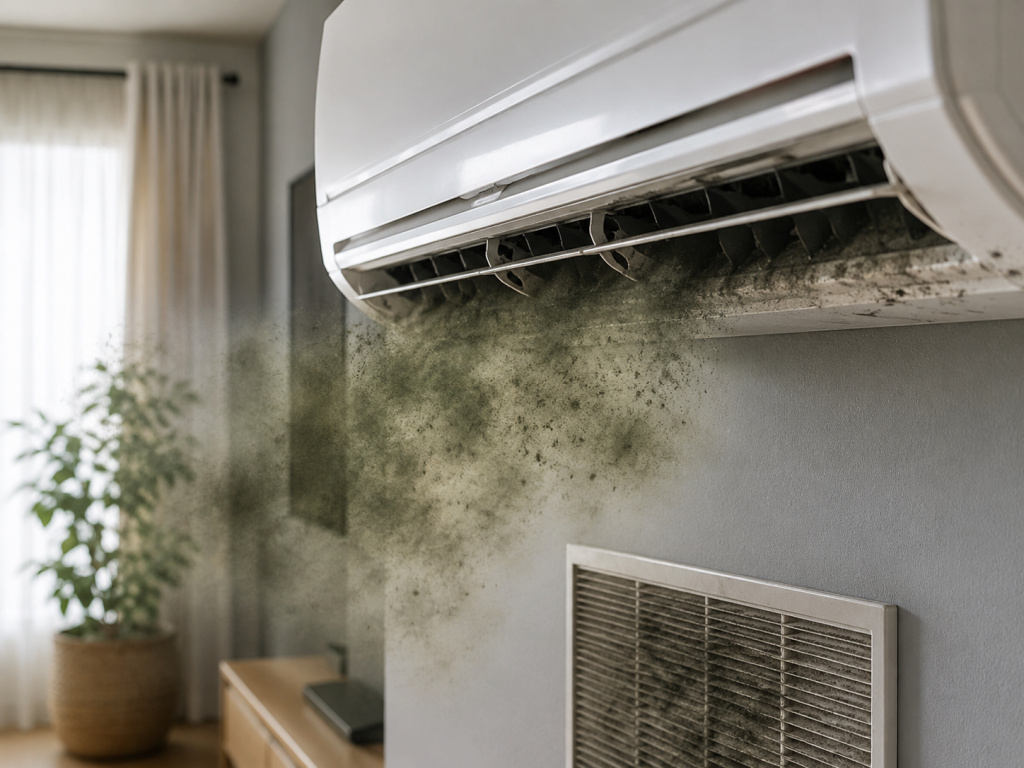
When your system is off, air inside the ducts sits still. Odors stay put. The moment the blower fires up, it pushes all that stagnant air through every vent in your house at once, which is why the smell hits hardest in the first 30 to 60 seconds.
If the odor fades as the system runs, the source is probably concentrated in one spot, like the evaporator coil or a section of duct. If it lingers the whole time the AC runs, the problem is more spread out, and that usually means the ductwork itself.
The Usual Suspects, Ranked by How Often We See Them
1. A Dirty or Damp Evaporator Coil
Your evaporator coil is cold and wet by design. That’s how it pulls humidity out of your air. But when dust coats the coil, that dust stays damp, and damp dust in a dark box is exactly what mildew wants. This is the single most common cause of the “dirty sock” smell HVAC techs talk about.
How to tell if this is your problem
The smell is strongest right at startup, seems to come from every vent equally, and often gets worse in spring when you switch from heating to cooling.
2. A Clogged Condensate Drain Line
Your AC pulls gallons of water out of San Antonio air every day, and all of it exits through a small drain line. When algae or sludge clogs that line, water backs up into the drain pan and sits there. Standing water in a warm closet or attic starts smelling swampy within days.
How to tell if this is your problem
Check the drain pan under your indoor unit. If there’s standing water, or you see water stains around the air handler, the drain line needs attention. Some homeowners notice this one gets worse after heavy rain weeks when the system runs constantly.
3. Mold or Mildew Inside the Ductwork
This is the one nobody wants, but in our climate it’s common. Ducts run through hot attics, and when cold air moves through them, condensation can form, especially where insulation has slipped or duct sections have small leaks. Add a layer of dust for the mold to feed on, and sections of your ductwork become a problem you can’t see.
The EPA’s guidance on mold and moisture is blunt about it: where there’s persistent moisture indoors, mold growth follows. Ducts are no exception.
How to tell if this is your problem
The musty smell doesn’t fade after startup. It may be stronger from specific vents rather than all of them. Some homeowners also notice allergy symptoms that improve when they leave the house. If you pull a vent cover and see dark spotting or fuzzy growth inside, stop guessing, that’s a job for professional mold removal in your air ducts, not a DIY spray.
4. Years of Dust, Dander, and Debris Buildup
Even without active mold, old buildup has a smell. Pet dander, pollen, dead insects, and plain dust absorb humidity and release a stale odor every time air moves across them. Homes that have never had their ducts cleaned, or haven’t in a decade, often have this baseline mustiness that owners stop noticing until guests mention it.
How to tell if this is your problem
The smell is faint but constant, dust reappears on furniture fast, and vent covers show gray buildup around the edges. A thorough air duct cleaning removes the material the odor lives in, which is why this smell disappears after cleaning rather than just getting masked.
5. Less Common Causes Worth Ruling Out
- A critter that got in. Attic ducts with gaps occasionally collect an unwelcome guest. That smell is distinctly worse than musty.
- Ductboard degradation. Older homes with fiberboard ducts can develop a musty odor as the material itself absorbs moisture over decades.
- Filter that’s overdue. A saturated, months-old filter sitting in the return can add its own funk. Cheapest fix on this list, so check it first.
What You Can Check Yourself This Weekend
Before spending a dollar, do three things:
- Replace the filter if it’s been more than 60 days. In San Antonio, systems run nearly year-round, so filters load up faster than the box suggests.
- Look at the drain pan under the indoor unit for standing water.
- Pull one or two vent covers and shine a light inside. You’re looking for dark spotting, heavy gray buildup, or visible dampness.
If the filter swap kills the smell, you’re done. If you see water, mold, or serious buildup, you’ve found your answer.
When It’s Time to Bring In a Pro
Musty odors that survive a filter change are telling you the source is deeper in the system than you can reach. Coil cleaning, drain line clearing, and duct interior cleaning all require equipment that doesn’t live in a garage.
One honest note: not every company approaches this the right way. Some will quote a cheap “odor treatment” that’s just fragrance fogged into your ducts. That masks the smell for two weeks while the moisture problem keeps growing. Independent comparisons like this roundup of the best air duct cleaning companies in San Antonio are worth a read before you book anyone, because the difference between removing an odor source and perfuming over it is the difference between fixing the problem and renting a solution.
If you’d rather just have a straight answer about what’s in your ducts, schedule an inspection and we’ll show you exactly what we find before any work starts. We’re NADCA certified and veteran owned, and if the fix is something small, we’ll tell you that too.
Frequently Asked Questions
Is a musty AC smell dangerous?
Mildly musty and fading? Usually just buildup. Persistent, strong, or paired with allergy symptoms? Treat it as a possible mold issue and get it inspected. Mold spores circulating through a home’s air supply is not something to wait out.
Will an air freshener or vent clip fix it?
No. Anything that adds scent is covering the odor while the source keeps growing. In a humid climate, moisture problems only move in one direction when ignored.
Why is this so common in San Antonio specifically?
Humidity, heat, and HVAC systems that run ten-plus months a year. Our systems pull more moisture and move more air annually than systems in most of the country, so everything that can go wrong with moisture goes wrong faster here.