
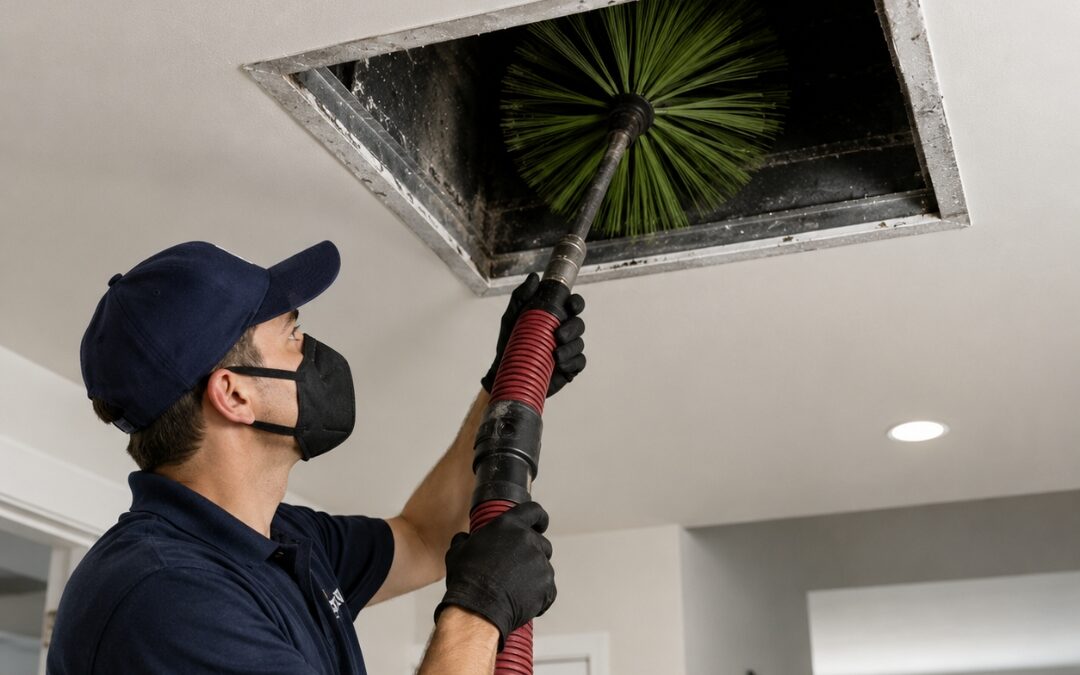
If your energy bill seems higher than usual, you may be wondering whether your HVAC system is to blame. One common question homeowners ask is: Can dirty air ducts increase your energy bill?
The answer is yes, dirty or poorly maintained ductwork can contribute to higher energy use in some situations. Dust and debris may restrict airflow, while leaks or damaged ducts can allow conditioned air to escape before it reaches your living spaces.
However, dirty air ducts aren’t always the cause of a high energy bill. Dirty filters, poor insulation, duct leaks, aging HVAC equipment, thermostat settings, and extreme weather can also increase energy consumption.
Understanding the connection between your ductwork and HVAC efficiency can help you determine what needs attention.
How Can Dirty Air Ducts Affect Energy Use?
Your HVAC system is designed to move conditioned air efficiently throughout your home. When airflow is restricted, your system may need to operate longer to maintain the temperature you set on your thermostat.
That additional operating time can increase energy consumption.
The U.S. Department of Energy explains that properly sealing and insulating ductwork can improve the efficiency of heating and cooling systems. This is particularly important when ducts run through unconditioned spaces such as attics, garages, or crawl spaces.
However, it’s important to distinguish between dirty ducts and inefficient ducts.
A duct system can be relatively clean but still waste energy because of leaks. Likewise, a dusty duct system may not significantly affect your energy bill if airflow remains normal.
1. Restricted Airflow Can Make Your HVAC Work Harder
One possible way dirty ductwork can affect energy consumption is by restricting airflow.
If substantial dust or debris accumulates inside parts of your HVAC system, air may have more difficulty moving through the ductwork.
When your system struggles to deliver enough conditioned air, it may run longer to reach the desired temperature.
Longer run times can mean higher energy use.
However, restricted airflow doesn’t automatically mean your ducts are dirty. A clogged filter, blocked register, damaged duct, or HVAC equipment problem can produce similar symptoms.
2. A Dirty HVAC Filter May Be the Real Problem
Before blaming your ductwork for a rising energy bill, check your HVAC filter.
A dirty filter can restrict airflow and make your heating or cooling system work harder. The Department of Energy recommends regularly checking and replacing HVAC filters as part of proper system maintenance.
How often you need to replace a filter depends on the filter type, household conditions, pets, and HVAC usage.
If the filter is visibly clogged, replacing it may be a simple first step before considering professional duct cleaning.
3. Duct Leaks Can Waste Conditioned Air
Duct leaks can have a direct impact on HVAC efficiency.
Imagine your air conditioner cools the air inside your home, but some of that conditioned air escapes through gaps or poorly sealed connections before reaching the rooms that need it.
Your HVAC system has already used energy to cool that air, but your home doesn’t receive the full benefit.
According to the Department of Energy, sealing ducts can improve the efficiency of heating and cooling systems.
For this reason, homeowners with high energy bills should consider duct inspection and sealing, not just duct cleaning.
4. Your HVAC System Runs Longer Than Normal
If your air conditioner or heater seems to run constantly, something may be affecting system performance.
Possible causes include:
- Dirty filters
- Restricted airflow
- Duct leaks
- Poor insulation
- Aging HVAC equipment
- Extreme outdoor temperatures
- Thermostat problems
- Refrigeration or mechanical issues
Dirty ductwork may be one possibility, but it shouldn’t automatically be blamed.
A professional HVAC inspection can help identify why your system is running longer than expected.
5. Some Rooms Are Too Hot or Too Cold
Uneven temperatures throughout your home can indicate an airflow or ductwork problem.
For example, your living room may feel comfortable while an upstairs bedroom remains noticeably warmer.
Possible causes include leaking or disconnected ducts, blocked registers, inadequate insulation, poor system balancing, or HVAC equipment problems.
If uneven temperatures occur alongside excessive dust or other signs of duct contamination, having the ductwork inspected may be worthwhile.
For a helpful checklist of warning signs, read How Do You Know If Your Air Ducts Need Cleaning? 10 Warning Signs.
6. Your Home Has Excessive Dust
Excessive household dust doesn’t automatically mean your ducts need cleaning.
Dust can enter your home from outdoor air, pets, carpets, furniture, and normal household activity.
However, if you notice dust around several HVAC registers, your home becomes dusty shortly after cleaning, and your HVAC filter gets dirty unusually fast, your ductwork may deserve an inspection.
Professional evaluation can determine whether the dust is coming from the duct system or another source.
7. You’ve Recently Completed Home Remodeling
Renovation projects can generate substantial amounts of dust and debris.
Drywall dust, sawdust, insulation particles, and construction debris can enter HVAC registers and ductwork during remodeling.
If you’ve recently renovated your home, especially if the HVAC system was running during construction, consider having the system inspected.
If significant contamination is found, professional cleaning may help remove accumulated debris.
Does Air Duct Cleaning Lower Your Energy Bill?
This is an important distinction.
Air duct cleaning isn’t guaranteed to lower your energy bill.
If significant debris is restricting airflow, cleaning may help the system move air more effectively. But if the real problem is leaking ducts, poor insulation, an aging HVAC unit, or a dirty filter, cleaning alone may not solve the issue.
The EPA does not recommend routine duct cleaning for every home. Instead, it recommends considering cleaning when there is a specific reason, such as substantial mold growth, vermin infestation, or significant deposits of dust and debris being released into the home.
So rather than thinking “high energy bill = dirty ducts,” consider:
High energy bill → inspect the HVAC system → identify the cause → clean, repair, seal, or maintain as needed.
How Often Should You Clean Your Air Ducts?
There is no universal cleaning schedule for every home.
Factors such as pets, remodeling, household conditions, indoor air quality, and the condition of the HVAC system can affect how often professional cleaning may be appropriate.
For Texas homeowners, read How Often Should You Clean Your Air Ducts in Texas? for more information about cleaning frequency and the factors that can affect it.
Rather than cleaning simply because a certain number of years have passed, look for actual evidence that your ductwork needs attention.
What Should You Check If Your Energy Bill Increases?
Before scheduling duct cleaning, check several common causes of increased energy consumption.
Check Your HVAC Filter
Replace a dirty filter according to the manufacturer’s recommendations.
Inspect Accessible Ductwork
Look for obvious damage, disconnected sections, or gaps around accessible ducts.
Check Your Thermostat
A small change in temperature settings can increase HVAC operating time, particularly during very hot or cold weather.
Check Your Insulation
Poor insulation can make it harder for your HVAC system to maintain comfortable indoor temperatures.
Schedule HVAC Maintenance
A qualified HVAC professional can evaluate the equipment, airflow, and other components that affect efficiency.
Check for Duct Leaks
If testing identifies leaking ductwork, sealing the leaks may provide a more direct energy-efficiency benefit than cleaning alone.
When Should You Consider Professional Air Duct Cleaning?
Consider having your ductwork professionally inspected if you notice several warning signs together, such as:
- Excessive household dust
- Visible debris inside ductwork
- Unusual odors
- Rapidly dirty HVAC filters
- Recent remodeling
- Heavy pet dander
- Airflow problems
- Unexplained HVAC performance issues
For the complete list, see How Do You Know If Your Air Ducts Need Cleaning? 10 Warning Signs.
An inspection can help determine whether duct cleaning is actually necessary or whether another HVAC problem needs to be addressed.
Final Thoughts
So, can dirty air ducts increase your energy bill?
They can contribute to higher energy use when significant buildup restricts airflow, but dirty ducts aren’t automatically responsible for a high energy bill.
Duct leaks, dirty filters, poor insulation, aging HVAC equipment, thermostat settings, and extreme weather can all affect your energy consumption.
The best approach is to identify the actual problem before paying for a specific service.
If you’re experiencing excessive dust, unusual odors, airflow problems, or other signs of duct contamination, a professional inspection can help determine whether your ductwork needs cleaning.
For homeowners in San Antonio and surrounding areas, America’s Best Duct Cleaning can evaluate your ductwork and help determine whether professional cleaning is appropriate.
Contact America’s Best Duct Cleaning to schedule an inspection and learn more about your home’s air duct system.
Frequently Asked Questions
Can dirty air ducts increase your energy bill?
They can contribute to higher energy use when substantial buildup restricts airflow. However, duct leaks, dirty filters, poor insulation, HVAC problems, and extreme temperatures can also increase energy costs.
Does air duct cleaning reduce energy bills?
It may help when significant contamination is restricting airflow, but cleaning isn’t guaranteed to reduce energy costs. The entire HVAC system should be evaluated to identify the actual cause of high energy use.
What causes a sudden increase in my energy bill?
Common causes include extreme weather, longer HVAC run times, dirty filters, duct leaks, poor insulation, thermostat changes, and aging or poorly maintained HVAC equipment.
Should I clean my air ducts if my energy bill is high?
Not necessarily. A high energy bill alone doesn’t prove that your ducts need cleaning. An HVAC inspection can help determine whether cleaning, duct sealing, equipment maintenance, or another solution is appropriate.
How often should air ducts be cleaned?
There is no universal schedule. The condition of your ductwork, pets, remodeling, household conditions, and other factors should be considered when determining whether professional cleaning is needed.