
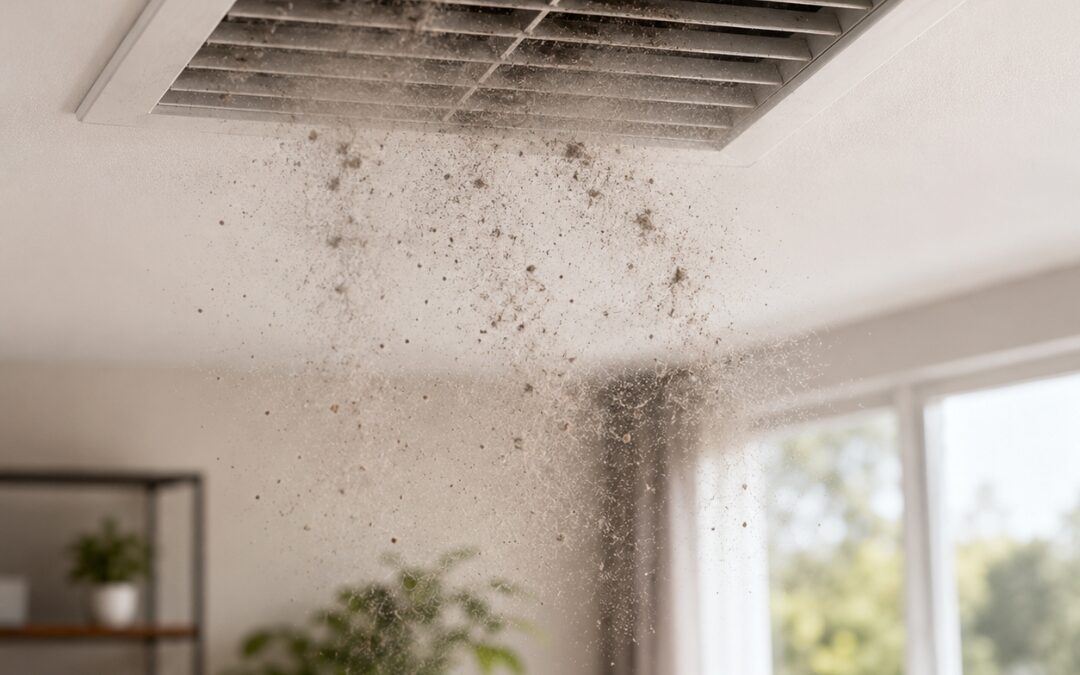
If you notice dust coming out of your air vents when your HVAC system turns on, you’re probably wondering what is causing it—and whether you need professional air duct cleaning.
A small amount of dust around an air vent is normal. Your return vents constantly pull air, along with airborne particles, into the HVAC system. However, visible dust blowing from multiple supply vents or a sudden increase in dust throughout your home may indicate an issue that deserves attention.
Possible causes include a dirty HVAC filter, gaps around the filter, dusty registers, excessive dust inside the ductwork, recent remodeling, or problems with the HVAC system itself.
The good news is that identifying the cause can help you choose the right solution instead of automatically assuming you need duct cleaning.
1. Your HVAC Filter Is Dirty
One of the first things to check when dust is coming from your vents is the HVAC filter.
Your filter is designed to capture dust and other airborne particles before they circulate through your home. When the filter becomes clogged, damaged, or improperly installed, more particles may get past it.
The U.S. Environmental Protection Agency recommends changing or cleaning HVAC filters regularly, following the manufacturer’s instructions.
If your filter is visibly dirty, replace it with the correct type and size for your HVAC system.
A filter that becomes dirty unusually quickly may also be a reason to have your HVAC system inspected.
2. Dust Has Built Up Around Your Air Vents
Sometimes the problem isn’t inside your ductwork at all.
Return registers naturally collect dust because they continuously pull air through the grille. The EPA notes that dusty return registers are normal and don’t necessarily mean the entire duct system is contaminated.
Remove accessible vent covers and clean them carefully with a vacuum or damp cloth.
If dust continues to appear quickly after cleaning, especially around several vents, investigate further.
3. There May Be Excessive Dust Inside Your Ductwork
Substantial deposits of dust and debris inside ductwork can become a concern when particles are actually being released into your home through supply registers.
The EPA recommends considering duct cleaning when ducts are clogged with excessive amounts of dust and debris and particles are being released into the home.
This is different from seeing a light layer of dust inside a duct. Some dust accumulation is normal.
If you suspect significant contamination, a professional inspection can determine whether cleaning is appropriate.
4. Your Home Has Recently Been Remodeled
Renovation work can create large amounts of airborne dust.
Drywall, sanding, cutting wood, insulation, flooring, and other construction activities can produce particles that may enter HVAC registers and ductwork.
If your HVAC system was operating during a major remodeling project, dust may have entered the system.
After construction is complete, clean the home thoroughly and consider having the HVAC system inspected if you notice unusual amounts of dust coming from the vents.
5. Your Air Filter Isn’t Installed Correctly
Even a high-quality filter won’t work properly if air can bypass it.
Check that the filter:
- Is the correct size
- Is installed in the correct direction
- Fits securely
- Isn’t damaged
- Is replaced according to the manufacturer’s recommendations
Gaps around the filter can allow unfiltered air and dust to enter the HVAC system.
The EPA recommends making sure filters fit properly and that air cannot bypass them through gaps around the filter holder.
6. You Have Pets in the Home
Pets can contribute significantly to household dust and airborne particles.
Dogs and cats shed hair and dander, and these particles can become part of the dust circulating through your home.
If you have multiple pets, you may notice dust accumulating around return vents, furniture, floors, and HVAC registers more quickly.
Regular vacuuming, cleaning, and proper HVAC filter maintenance can help reduce the amount of airborne dust.
If dust continues to blow from multiple vents despite regular maintenance, consider having your ductwork inspected.
7. Your Ductwork May Have Leaks or Damage
Dust coming from vents isn’t always caused by dirty ducts.
Damaged, disconnected, or poorly sealed ductwork can affect how air and particles move through your HVAC system.
Leaks in return-side ductwork can potentially draw dusty air from attics, crawl spaces, garages, or other areas into the HVAC system.
This is one reason a professional inspection can be more useful than simply scheduling a cleaning.
A technician can look for visible duct damage, disconnected sections, and other problems that may be contributing to dust.
8. Your HVAC System May Need Maintenance
Dust coming from vents can sometimes be related to components beyond the ductwork.
Your HVAC system contains several parts that require maintenance, including filters, coils, blower components, and drain pans.
The EPA explains that professional HVAC system cleaning can involve multiple components, not just supply and return ducts.
If your HVAC system hasn’t been inspected or maintained recently, scheduling professional service can help identify the source of the problem.
9. The Dust Problem Is Affecting Multiple Rooms
One dusty vent doesn’t necessarily indicate a major problem.
But if you’re seeing dust from several supply vents throughout the home, the issue deserves more attention.
Look for other warning signs, including:
- Excessive household dust
- Musty odors
- Visible debris around vents
- Rapidly dirty filters
- Uneven airflow
- Dust returning shortly after cleaning
If you’re experiencing several of these symptoms, read How Often Should You Clean Your Air Ducts in Texas? to learn more about factors that can affect when professional duct cleaning may be appropriate.
10. Your HVAC System Is Running More Than Usual
If dust problems are accompanied by longer HVAC run times or higher energy bills, there may be an airflow or ductwork issue worth investigating.
Restricted airflow can make an HVAC system work harder, although dust isn’t necessarily the cause.
Other possibilities include dirty filters, duct leaks, poor insulation, thermostat settings, or equipment problems.
For more information, read Can Dirty Air Ducts Increase Your Energy Bill? Here’s What to Know.
How to Stop Dust From Coming Out of Your Air Vents
The right solution depends on what’s causing the dust.
Replace Your HVAC Filter
Start by checking and replacing your filter according to the manufacturer’s recommendations.
A clogged filter can restrict airflow and affect HVAC performance.
Clean Your Vent Covers
Remove accessible registers and grilles and clean them regularly. Vacuuming and wiping surfaces can remove accumulated dust.
Keep Your Home Clean
Regular vacuuming and dusting can reduce the amount of material available to enter the HVAC system. The EPA recommends regular cleaning and appropriate HVAC filter maintenance to help reduce indoor particulate matter.
Check for Duct Problems
If dust continues to come from your vents after changing the filter and cleaning registers, have the ductwork and HVAC system inspected.
Consider Professional Duct Cleaning When Appropriate
Professional cleaning may be appropriate when substantial dust and debris have accumulated inside the system and are being released into your home.
However, don’t assume every dusty vent requires duct cleaning. The EPA does not recommend routine duct cleaning for every home; it recommends cleaning when there is a specific reason to do so.
When Should You Call a Professional?
Consider scheduling an inspection if:
- Dust continues coming from multiple vents
- Your filters become dirty unusually quickly
- You see substantial debris inside accessible ductwork
- You recently completed major remodeling
- You notice unusual or musty odors
- Your HVAC system has airflow problems
- You suspect damaged or leaking ducts
- Your home becomes dusty shortly after cleaning
A professional can determine whether the cause is dirty ductwork, a filter problem, duct leakage, HVAC maintenance, or another issue.
Final Thoughts
So, why is dust coming out of your air vents?
The cause could be something simple, such as a dirty filter or dusty vent cover. But persistent dust coming from multiple vents can also point to excessive contamination, ductwork problems, or another HVAC issue.
Start with the basics: check your filter, clean accessible registers, and keep your home free of excessive dust. If the problem continues, professional inspection can help identify the actual cause.
For homeowners in San Antonio and surrounding areas, America’s Best Duct Cleaning can inspect your HVAC system and determine whether professional duct cleaning is appropriate.
Contact America’s Best Duct Cleaning to discuss your air duct concerns and schedule service.
Frequently Asked Questions
Why is dust blowing out of my air vents?
Common causes include a dirty or improperly installed filter, dusty registers, excessive dust inside the ductwork, recent remodeling, damaged ductwork, or other HVAC maintenance issues.
Is it normal to see dust around air vents?
Yes. Some dust around vents, especially return registers, is normal. However, repeated dust blowing from multiple supply vents may warrant further investigation.
Can dirty air ducts make my house dusty?
They can contribute to dust circulation when substantial amounts of dust and debris are present and being released through supply registers. However, household dust comes from many sources, so ductwork shouldn’t automatically be blamed.
Should I clean my air ducts if dust is coming from the vents?
Not necessarily. First check your HVAC filter and clean accessible registers. If substantial debris is present or dust continues coming from multiple vents, consider a professional inspection.
How often should I clean my air ducts?
There is no universal schedule. The condition of the ductwork, household conditions, pets, remodeling, and other factors should be considered. See How Often Should You Clean Your Air Ducts in Texas? for more information.